

If you’re exploring UV exposure units for screen printing in Phoenix, you’re likely facing unique challenges from our desert climate while seeking to optimize your production process. Whether you’re upgrading equipment or starting fresh, we understand that choosing the right exposure unit in our extreme environment requires careful consideration of both technology and local conditions.
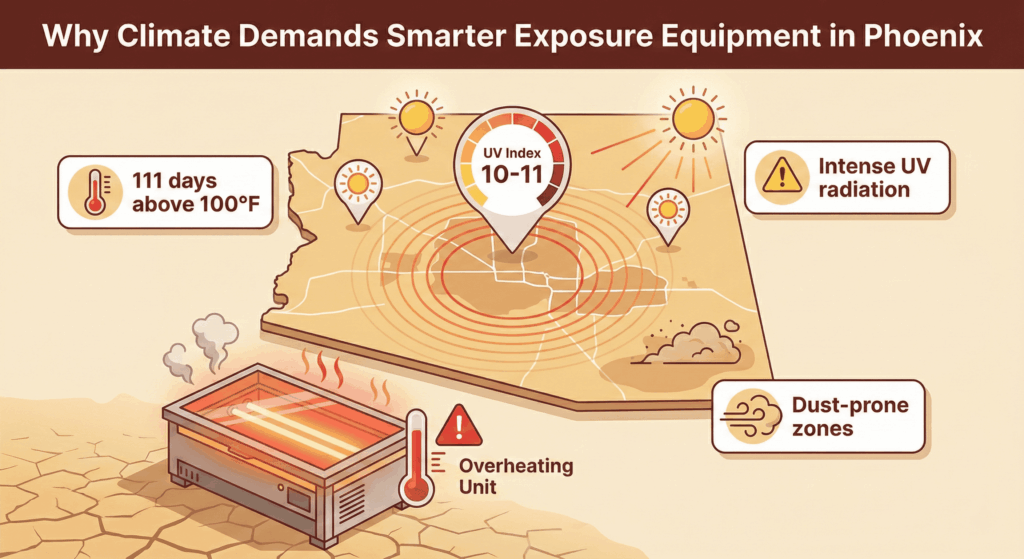
UV exposure units for screen printing are specialized devices that emit ultraviolet light between 390-405 nanometers wavelength to cure photopolymer emulsions on screens, creating the stencils essential for the screen printing process. In Phoenix’s extreme climate—with 111 days annually exceeding 100°F and intense UV radiation—these units face unique operational demands that make equipment selection particularly critical for maintaining quality and efficiency.
TL;DR Summary: This comprehensive guide explores how UV exposure units function through LED and metal halide technologies, with LED units offering significant advantages in power consumption (100 watts vs. 1,000-8,000 watts) and lifespan (50,000+ hours vs. 500-2,000 hours). We examine the different types of units available, from tabletop to standalone models, and detail how Phoenix’s extreme heat and UV index affect exposure times and equipment performance. Critical considerations for choosing equipment include power consumption impacts on operating costs with Arizona’s 9.53¢/kWh commercial rate, sizing requirements for different production volumes, and the importance of local supplier support from companies like ScreenPrinting.com and Advanced Screen Print Supply. We cover essential maintenance practices for dusty desert conditions and safety compliance with OSHA and ADEQ regulations. Finally, we highlight how Thrive Screen Printing’s 40,000-square-foot Phoenix facility demonstrates successful adaptation to local climate challenges through modern equipment choices and operational excellence.
Quick Tip: Install a dedicated thermometer near your exposure unit to monitor ambient temperature—if it exceeds 85°F, consider additional cooling measures to prevent inconsistent exposures and extend equipment life.
As we dive deeper into UV exposure technology and its application in Phoenix’s unique environment, you’ll discover how modern LED systems have revolutionized the screen printing process, offering solutions specifically suited to our desert climate’s demands. The following sections will equip you with the knowledge to make informed decisions about UV exposure units that will thrive in Phoenix’s challenging conditions while maximizing your shop’s productivity and profitability.
How Do UV Exposure Units Function in the Screen Printing Process?
UV exposure units function by emitting ultraviolet light to cure photopolymer emulsions on screens, creating precise stencils essential for quality screen printing. Modern exposure units use either LED or traditional metal halide technology to deliver controlled UV radiation that hardens emulsion-coated screens. In Phoenix’s extreme heat climate, exposure units face additional challenges from ambient temperatures exceeding 100°F for 111 days annually, making equipment selection and thermal management critical for consistent operations.
The following sections detail the specific roles of UV light, exposure process impacts on quality, and screen compatibility considerations for Phoenix screen printing operations.
What Role Does UV Light Play in Exposing Screens?
UV light creates stencils on emulsion-coated screens by curing photopolymer emulsions at wavelengths between 390-405 nanometers. LED exposure units provide instant on/off capability with no warm-up time required, offering immediate operational readiness. Traditional metal halide lamps emit broadband UV spectrum but require 5-15 minutes warm-up time before achieving optimal exposure conditions.
The curing process transforms liquid photopolymer emulsions into solid, durable stencils that define print areas on screens. This UV-activated chemical reaction forms the foundation of the entire screen printing process, determining both image quality and production efficiency.
How Does the Exposure Process Affect Print Quality?
The exposure process directly affects print quality through timing precision and UV output consistency. LED units offer exposure times measured in seconds compared to minutes for traditional units, enabling higher throughput of screens and increased shop productivity. Consistent UV output prevents overheating that causes inconsistent curing and compromised stencil quality.
Regular exposure tests determine correct exposure times for specific emulsion and exposure unit combinations. Phoenix’s intense ambient UV environment, with UV index ratings reaching 10-11 during summer months, requires frequent calibration adjustments to maintain optimal exposure parameters.
What Types of Screens Are Compatible with UV Exposure Units?
Modern photopolymer emulsions work specifically with UV wavelengths between 390-405 nanometers, ensuring proper chemical activation and curing. Screens require storage in cool, dark, dry environments to prevent premature exposure and emulsion degradation. High humidity during Phoenix’s monsoon season affects emulsion performance, requiring controlled storage conditions and adjusted processing parameters.
Screen mesh types and emulsion formulations must match the exposure unit’s spectral output for optimal results. Water-based emulsions cure faster in Phoenix’s arid climate, while solvent-based options offer enhanced durability under extreme heat conditions. This section prepares for examining different exposure unit technologies and their specific advantages for Phoenix operations.
What Are the Different Types of UV Exposure Units Used in Screen Printing?
UV exposure units for screen printing fall into two main categories: LED units and traditional metal halide systems, each offering distinct advantages for Phoenix-based operations. The choice between tabletop and standalone configurations depends on production volume and workspace requirements.
How Do LED UV Exposure Units Compare to Traditional Units?
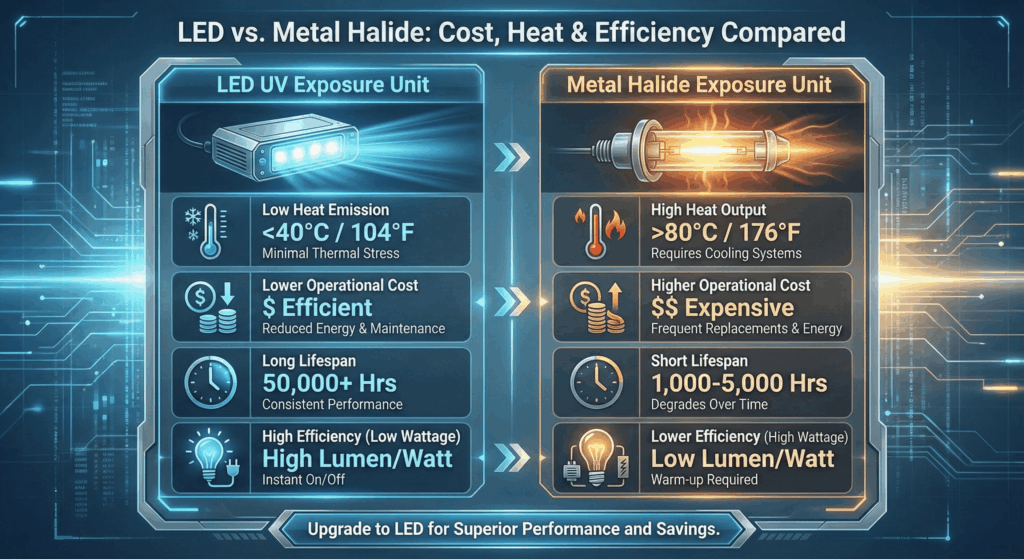
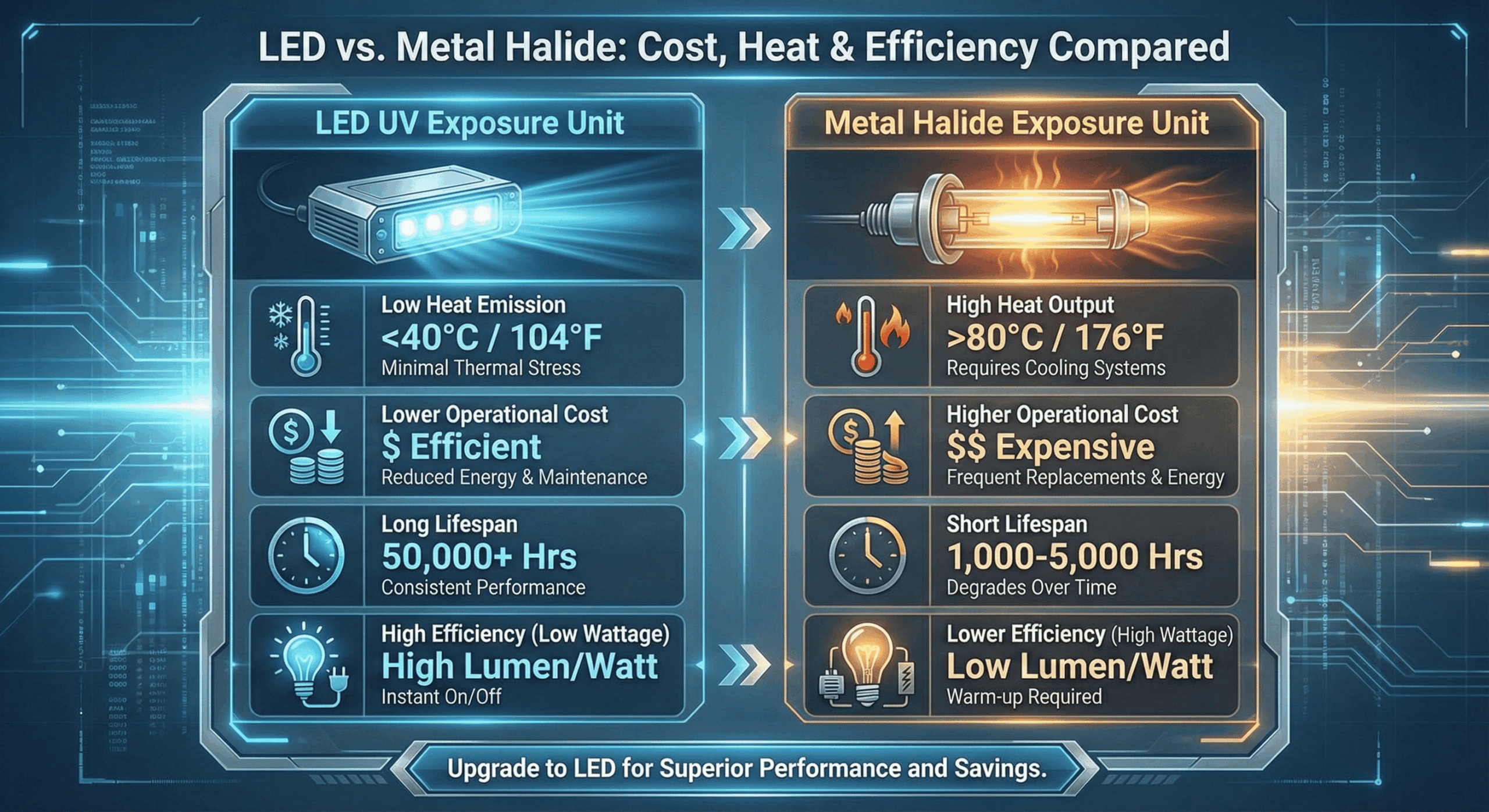
LED UV exposure units consume approximately 100 watts compared to 1,000-8,000 watts for traditional metal halide units, delivering significant energy savings crucial for Arizona’s commercial electricity rate of 9.53¢/kWh. LED exposure units achieve a lifespan of 50,000+ hours versus 500-2,000 hours for metal halide bulbs, reducing replacement costs and downtime. LED units produce minimal heat output compared to traditional metal halide lamps, making them ideal for Phoenix’s extreme temperatures. Metal halide units require regular bulb replacement and reflector cleaning as ongoing maintenance, while LED systems operate with virtually no maintenance requirements.
The energy efficiency difference becomes substantial in Phoenix operations—a traditional 5,000-watt metal halide unit costs approximately $2,385 annually in electricity, while a 100-watt LED unit costs just $48 per year for the same operating hours.
What Are the Pros and Cons of Tabletop Versus Standalone UV Exposure Units?
Tabletop UV exposure units offer space efficiency and lower upfront costs, making them suitable for small shops with limited workspace and moderate production volumes. These units typically accommodate screen sizes up to 20″ x 24″ and integrate easily into existing workbenches. Standalone UV exposure units provide larger exposure areas (up to 25″ x 36″ or more), faster throughput, and professional-grade construction suitable for high-volume operations like those in Thrive Screen Printing’s 40,000-square-foot facility.
Tabletop Unit Benefits:
- Lower initial investment ($500-2,000)
- Minimal workspace requirements
- Portable for small operations
- Adequate for prototype and small-batch work
Standalone Unit Advantages:
- Higher production capacity
- Larger screen accommodation
- Enhanced cooling systems
- Professional durability for continuous operation
Which Features Should You Look for in a UV Exposure Unit?
Narrowband UV emission between 390-405 nm provides ideal wavelength for curing modern photopolymer emulsions effectively and consistently. Low power consumption reduces operating costs significantly, with LED units offering 90% energy savings compared to traditional systems in Arizona’s commercial electricity environment. Minimal maintenance requirements eliminate frequent and costly bulb replacements that burden traditional metal halide systems. Adequate cooling systems including internal fans or liquid cooling ensure thermal management essential for Phoenix’s 111 days above 100°F annually.
Additional critical features include programmable timers for consistent exposures, vacuum drawdown systems for screen-to-glass contact, and instant on/off capability to maximize productivity. A 2019 study by the Specialty Graphic Imaging Association found that shops using LED exposure units increased screen production by 40% due to eliminated warm-up times and reduced heat management issues.
This comprehensive evaluation of UV exposure unit types prepares screen printing operations to select equipment optimized for Phoenix’s unique climate challenges and energy considerations.
How Does Phoenix’s Climate Impact the Use of UV Exposure Units?
Phoenix’s extreme climate significantly affects UV exposure unit performance and screen printing operations. The city’s intense heat, arid conditions, and high UV index create unique challenges that require specific adaptations for optimal equipment function.
Understanding these climate-related factors helps Phoenix screen printing shops optimize their exposure processes, protect equipment, and maintain consistent print quality year-round. The following adjustments address temperature management, humidity control, and ambient light considerations.
What Adjustments Are Needed for Screen Printing in High Temperatures?
Screen printing adjustments in high temperatures focus on thermal management and equipment protection. Phoenix experiences 111 days per year with temperatures exceeding 100°F (38°C), with average high temperatures in summer months (June, July, August) exceeding 100°F consistently.
High ambient temperatures put additional strain on screen printing equipment, especially traditional metal halide exposure units that generate significant heat. Climate-controlled environments with air conditioning are essential for protecting screens, inks, and equipment from thermal damage.
Heat-resistant inks like plastisol are preferred for their durability in Phoenix’s climate. These thermal management strategies ensure consistent exposure results and extend equipment lifespan during extreme temperature periods.
How Do Dry Conditions Affect Emulsion Exposure Times?
Dry conditions in Phoenix alter emulsion behavior and exposure timing requirements. Water-based inks dry faster in Phoenix’s arid climate, affecting production timing and workflow scheduling.
Emulsion is sensitive to heat and UV light, requiring careful storage conditions in climate-controlled areas away from direct sunlight. Regular exposure tests are necessary due to intense ambient UV light affecting standard exposure times and requiring recalibration.
Proper humidity control and storage protocols prevent emulsion degradation and maintain consistent exposure results throughout Phoenix’s dry climate conditions.
Does Sunlight Interfere with Screen Exposure in Phoenix?
Sunlight interference creates significant challenges for screen exposure in Phoenix’s high-UV environment. Phoenix has a very high UV index, reaching 10-11 on the scale during summer months, classified as “extreme” exposure levels.
Intense ambient UV light in Phoenix can affect exposure times and require adjustment to standard protocols. Screens must be stored away from sunlight to prevent premature exposure and maintain stencil quality.
These extreme UV conditions necessitate careful light management in screen printing facilities and adjusted exposure protocols to account for ambient light contamination.
The combination of Phoenix’s extreme temperatures, arid conditions, and intense UV exposure creates a unique operating environment that requires specialized approaches to UV exposure unit operation and screen handling protocols.
What Should You Consider When Choosing a UV Exposure Unit for a Phoenix Screen Printing Shop?
When choosing a UV exposure unit for a Phoenix screen printing shop, consider power consumption, size capacity, and local support availability. Phoenix’s extreme climate—with 111 days annually exceeding 100°F—demands careful equipment selection to balance performance with operational costs.
How Does Power Consumption Influence Choice in Arizona?
Power consumption significantly impacts operating costs in Arizona’s commercial electricity market at 9.53¢/kWh. LED units consume approximately 100 watts compared to traditional metal halide units that draw 1,000-8,000 watts—an 80-90% reduction in energy usage. A 2019 Department of Energy study on LED commercial applications found that LED exposure units achieve payback within 18-24 months through reduced electricity costs and minimal maintenance requirements. Lower operating costs of LED units lead to faster return on investment despite higher upfront equipment costs.
What Size and Capacity Best Fit Different Printing Volumes?
The size and capacity requirements depend on your shop’s production volume and workflow efficiency. Thrive Screen Printing operates from a 40,000-square-foot facility in Phoenix, accommodating high-volume production with instant on/off LED capability for maximum screen throughput. LED units eliminate warm-up time completely, allowing shops to process screens immediately versus 5-15 minutes required for metal halide units. Consider exposure area dimensions, screen frame compatibility, and daily screen volume when selecting capacity—larger shops benefit from dual-exposure capabilities or conveyor-style systems.
Is Local Support and Maintenance Important for Your Equipment?
Local support and maintenance prove crucial for minimizing downtime and ensuring quick repairs in Phoenix’s demanding climate. ScreenPrinting.com (via Ryonet) maintains a strong presence in Phoenix with Baselayr brand LED exposure units, offering regional technical support and parts availability. Advanced Screen Print Supply operates as a local Phoenix-based equipment supplier, providing hands-on service and training. Buckets of Ink delivers local screen printing products and support throughout the Phoenix area, ensuring rapid response for equipment issues.
This equipment selection directly influences daily production efficiency and long-term profitability, particularly when combined with proper maintenance practices for the Southwest climate.
What Are the Best Practices for Maintaining and Operating UV Exposure Units in Phoenix?
The best practices for maintaining and operating UV exposure units in Phoenix focus on managing extreme heat, dust control, and equipment longevity in Arizona’s challenging climate. Phoenix’s 111 days above 100°F annually create unique demands for UV exposure equipment maintenance and operation protocols.
How Often Should You Service UV Exposure Equipment?
UV exposure equipment service intervals depend on unit type and Phoenix’s environmental conditions. LED units require minimal maintenance with lifespans exceeding 50,000 hours, while traditional metal halide bulbs need replacement every 500-2,000 hours of operation. Phoenix’s dusty environment demands regular cleaning of glass surfaces and dust removal from cooling systems to maintain optimal UV output. Electrical components require monthly inspection due to heat stress from Arizona’s extreme temperatures, which can cause premature component failure without proper monitoring.
What Common Issues Might Arise in the Southwest Climate?
Common UV exposure unit issues in Phoenix include:
- Thermal stress: Overheating reduces LED lifespan and causes inconsistent curing without adequate thermal management systems
- Accelerated wear: High ambient temperatures shorten overall equipment lifespan and increase maintenance frequency
- Contamination: Dust and debris accumulation requires weekly equipment cleaning in Phoenix’s arid conditions
- Humidity fluctuations: Monsoon season humidity affects emulsion storage and screen preparation processes
Phoenix’s extreme UV index of 10-11 during summer months also affects exposure timing calculations and requires regular calibration adjustments for consistent results.
What Safety Precautions Should Be Followed During Operation?
Safety protocols for UV exposure unit operation must comply with federal and Arizona-specific regulations. OSHA standards require proper machine guarding for moving parts on presses and associated equipment to prevent workplace injuries. Chemical safety protocols are necessary for handling inks, solvents, and cleaning chemicals used in the exposure process.
Arizona Department of Environmental Quality (ADEQ) regulates hazardous waste management and disposal procedures for screen printing operations. Screen printing shops may require ADEQ air quality permits depending on pollutant emissions from UV-cured materials and cleaning solvents. Ergonomic considerations prevent musculoskeletal disorders from repetitive motions during screen handling and exposure unit operation.
This comprehensive maintenance approach ensures UV exposure units operate efficiently in Phoenix’s demanding climate while meeting all safety and regulatory requirements for screen printing operations.
How Should You Approach UV Exposure Units for Screen Printing in Phoenix With Thrive Screen Printing?
Can Thrive Screen Printing Provide Guidance or Services for UV Exposure Units?
Thrive Screen Printing provides expert guidance for UV exposure unit selection and implementation in Phoenix’s challenging climate. The nationally recognized company operates from a 40,000-square-foot facility in Phoenix, serving clients from small businesses to large corporations with comprehensive screen printing solutions.
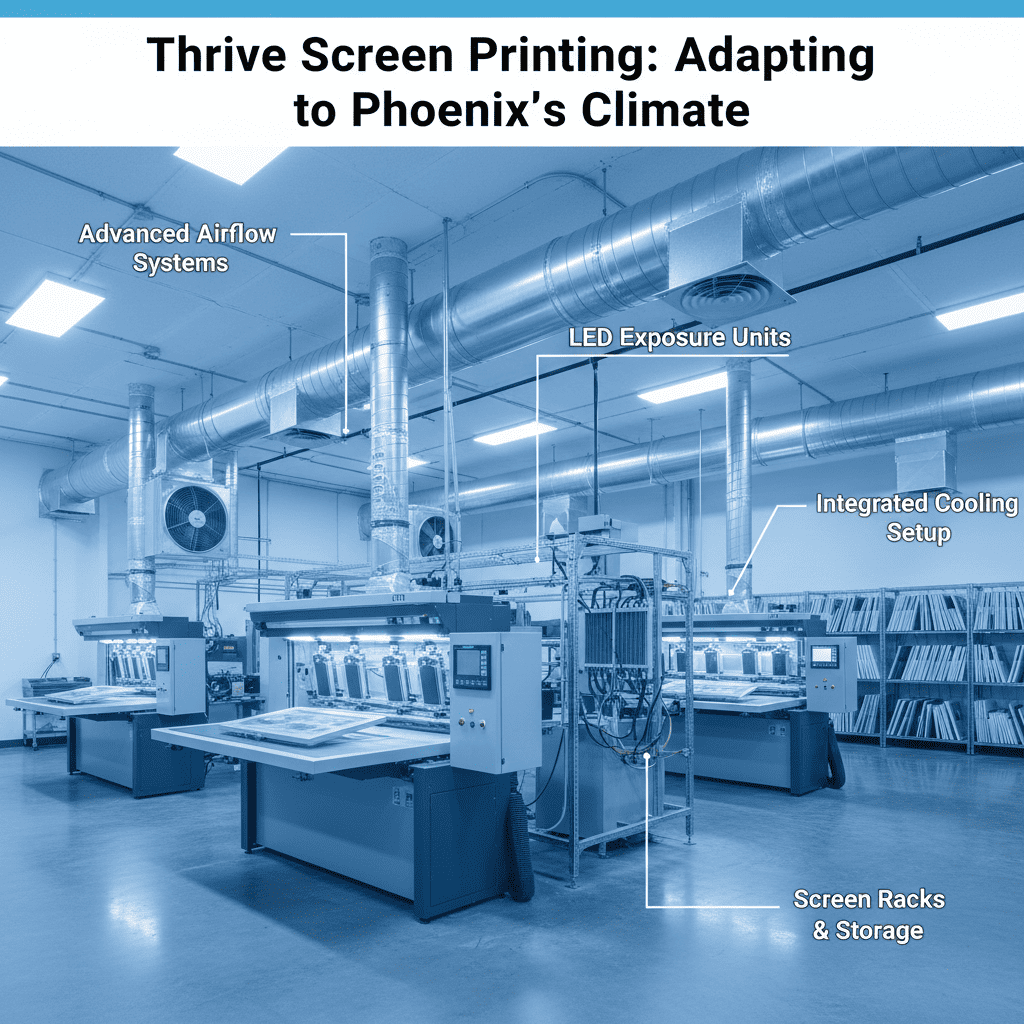
Thrive’s emphasis on quality and efficiency demonstrates their expertise with modern LED exposure equipment. Their success in the Phoenix market showcases proven experience adapting to local climate challenges, including extreme heat and dust conditions that affect equipment performance.
The company’s large-scale operation requires high-throughput exposure capabilities, making them well-positioned to advise on UV exposure unit selection, maintenance protocols, and operational best practices. Their facility size and client diversity provide valuable insights into scalability considerations for different business sizes.
Thrive’s local presence offers direct consultation on equipment specifications suitable for Phoenix conditions, including thermal management requirements and energy efficiency considerations critical for Arizona operations.
What Are the Key Takeaways About UV Exposure Units for Screen Printing in Phoenix We Covered?
LED technology offers the ideal solution for Phoenix screen printing operations with significantly lower heat output and superior energy efficiency compared to traditional units. LED units consume approximately 100 watts versus 1,000-8,000 watts for metal halide systems, providing substantial cost savings with Arizona’s commercial electricity rate at 9.53¢/kWh.
Phoenix screen printing shops face unique challenges with 111 days above 100°F annually, requiring equipment that operates reliably under extreme heat stress. LED exposure units provide instant on/off capability and 50,000+ hour lifespans, eliminating warm-up periods and frequent bulb replacements that increase operational costs.
| Equipment Type | Power Consumption | Lifespan | Heat Output | Maintenance |
| LED Units | 100W | 50,000+ hours | Minimal | Very Low |
| Metal Halide | 1,000-8,000W | 500-2,000 hours | High | Frequent |
ROI calculations should include energy savings, increased productivity from faster exposure times, and reduced maintenance costs from longer equipment lifespans. Local suppliers like ScreenPrinting.com, Advanced Screen Print Supply, and Buckets of Ink provide essential Phoenix-area support for equipment installation, training, and ongoing maintenance services.
Compliance with OSHA safety standards and Arizona Department of Environmental Quality regulations remains mandatory for all screen printing operations, requiring proper ventilation, chemical handling protocols, and hazardous waste management procedures.

Robert Fisher is the founder and CEO of Thrive Screen Printing and brings extensive experience in the screen printing and fulfillment industry.