

If you’re exploring screen printing options for your next apparel project, you’ve likely encountered the term “water-based ink” and wondered how it differs from traditional printing methods. You’re in the right place to discover why this eco-friendly alternative has captured the attention of brands and printers worldwide. We’re here to guide you through everything you need to know about water-based ink, from its unique composition to its growing dominance in the textile industry.
Water-based ink in screen printing is a printing medium that uses water as its primary solvent instead of toxic chemicals, containing water-soluble resins, pigments, and eco-friendly additives that penetrate fabric fibers to create soft, breathable prints. Unlike plastisol inks that sit on top of fabric, water-based inks sink into the garment, becoming part of the material itself and delivering prints that feel as comfortable as the unprinted fabric.
TL;DR Summary:
- Water-based inks replace 30-70% toxic solvents with water, reducing VOC emissions by up to 90% compared to traditional inks
- The ink penetrates fabric fibers rather than sitting on top, creating incredibly soft prints you can’t feel on the shirt
- Both plastisol and water-based inks offer durability when properly cured, but water-based provides better breathability and comfort
- Water-based inks work best on light-colored garments and require specific humidity conditions (above 40% R.H.) during printing
- Curing requires complete water evaporation followed by 20+ seconds at proper temperature, typically 1:30-2:00 in conveyor dryers
- In 2024, over 42% of screen printing processes utilized water-based inks, with 68% of global apparel brands making the transition
- Thrive Screen Printing, with experience since 1990, offers professional water-based printing services with capacity for 20,000 prints per 8-hour shift
Quick Tip: Before adding water-based ink to your screen, pre-wet the mesh with clean water using a car wash sponge. This simple step allows the ink to “float” on the mesh, preventing premature drying and ensuring smoother prints throughout your production run.
How Does Water-Based Ink Differ From Other Types of Screen Printing Ink?
Water-based ink differs from other screen printing inks through its composition, application method, and final appearance on garments. Unlike plastisol or solvent-based alternatives, water-based ink penetrates fabric fibers to become part of the garment itself. This section examines the key ingredients, performance comparisons, and main types of water-based ink used in screen printing.
What Are the Key Ingredients in Water-Based Ink?
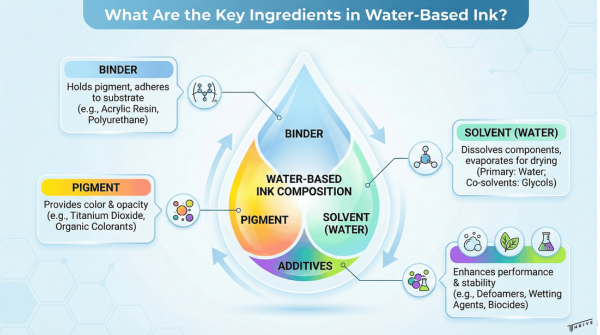
Water-based ink consists of four primary components: binder, pigment, solvents, and additives. The binder contains water-soluble or water-dispersed resins that hold the pigment to the fabric. Pigments include silica, titanium dioxide, carbon black, oxides, and metal salts that provide color and opacity. Water serves as the primary solvent, replacing 30-70% of toxic organic solvents found in traditional inks.
Non-ionic surfactants function as emulsifiers and form micelles in solution for stable oil-in-water emulsion. Water-soluble acrylic modified resin provides excellent gloss, weather resistance, heat resistance, water resistance, chemical resistance, and pollution resistance. These ingredients work together to create an environmentally safer alternative that maintains professional printing quality.
How Do Plastisol and Water-Based Inks Compare in Performance and Appearance?
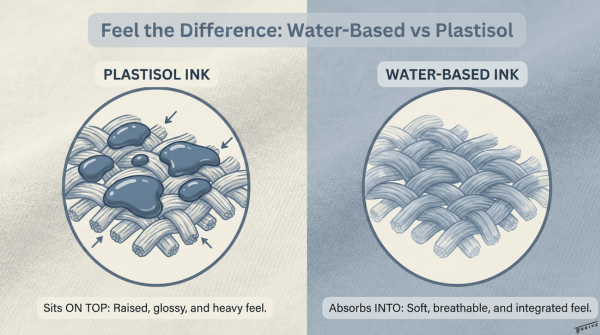
Water-based ink sinks into fabric to become part of the garment, while plastisol sits on top of the fabric surface without penetrating. Water-based ink lasts as long as the garment with no cracking or peeling, whereas plastisol eventually breaks down after several washes and tends to crack, peel, or flake off.
On 100% cotton, water-based ink produces bright and vibrant prints. On cotton/polyester blends or tri-blends, colors appear more toned down. Water-based ink achieves a soft hand when water-soluble solvents evaporate, leaving only pigmented binder compounds with less ink deposit than plastisol. Plastisol creates a heavy hand with thick layers sometimes called “sweat patches.”
Water-based ink offers superior breathability by absorbing into fabric and leaving fiber openings open. Both inks prove extremely durable when properly cured, though their application methods and final feel differ significantly.
What Are the Main Types of Water-Based Ink Used in Screen Printing?
The main types of water-based ink include lacquer water-based, contact printing water-based, matte inks, and emulsion inks. Lacquer water-based ink is the most common type, offering opacity for logos and graphics. Low solids water-based ink represents traditional formulations meant for lighter garments because it lacks opacity.
High solids water-based ink features a thicker body with better coverage and opacity, creating a slightly more noticeable feel on the finished garment. Discharge ink contains formaldehyde that bleaches dye from garments, proving especially useful for dark or colored garments but only effective on 100% cotton.
Newer ink systems use minimal water and move away from water toward solvent formulations. Each type serves specific applications based on garment color, desired opacity, and printing requirements.
This comparison reveals how water-based ink’s unique composition creates distinct advantages in breathability and environmental impact while requiring different handling techniques than traditional alternatives.
What Are the Advantages and Disadvantages of Using Water-Based Ink?
Water-based ink offers distinct advantages and disadvantages that significantly impact print quality, environmental impact, and production efficiency. Understanding these trade-offs helps screen printers select the optimal ink system for specific projects and client requirements.
The following sections examine the key benefits of water-based inks for comfort and environmental sustainability, alongside the practical challenges that printers face during production. These considerations directly influence project timelines, costs, and final garment quality.
What Benefits Do Water-Based Inks Offer for Wearability and Softness?
Water-based inks provide exceptional wearability through their soft-hand feel and breathable finish. The ink penetrates fabric fibers rather than sitting on the surface, creating a natural texture that maintains the garment’s original breathability. This penetration allows wearers to experience no tactile sensation of the printed design.
Water-based inks settle deeper into fabric fibers than plastisol alternatives, enabling greater detail reproduction in complex designs. The penetration process eliminates the heavy, plastic-like feel associated with traditional plastisol prints, delivering comfortable wear experiences even in high-temperature conditions.
Key comfort advantages include:
- Complete fiber penetration eliminating surface texture
- Maintained fabric breathability and natural drape
- Enhanced detail reproduction for intricate designs
- Absence of “sweat patch” effect common with thicker ink deposits
The next section explores how these inks address environmental concerns while potentially reducing operational costs.
Are There Environmental Advantages to Choosing Water-Based Ink?
Water-based inks deliver significant environmental benefits compared to solvent-based alternatives. According to the U.S. Environmental Protection Agency (EPA), water-based inks reduce VOC emissions by up to 90% compared to solvent-based formulations, substantially lowering air quality impacts and regulatory compliance costs.
These inks utilize biodegradable and compostable components that break down naturally without environmental harm. Water-based formulations exclude harmful elements such as phthalates and PVC, replacing traditional toxic organic solvents that typically comprise 30-70% of conventional ink systems.
Environmental and cost benefits include:
- 90% VOC emission reduction (EPA data)
- 30% lower costs compared to solvent-based alternatives
- Biodegradable formulations without phthalates or PVC
- 29% increased bio-based binder adoption due to microplastic pollution awareness
Rising environmental consciousness has driven broader industry adoption, with water-based systems meeting international standards like OEKO-TEX 100 and REACH compliance requirements.
What Challenges or Limitations Exist When Printing With Water-Based Ink?
Water-based inks present several production challenges that require specialized handling and equipment considerations. Print quality becomes heavily influenced by garment color, making dark fabric applications particularly complex due to transparency issues and limited opacity compared to plastisol systems.
Production efficiency suffers from increased processing time and sensitivity to environmental conditions. Water-based inks require careful humidity control above 40% relative humidity and respond poorly to low ambient conditions where rapid evaporation causes premature drying and screen blockage.
Primary limitations include:
- Color-dependent print quality affecting dark garment applications
- Higher time investment and costs compared to plastisol processing
- Sensitivity to humidity and evaporation during production
- Screen plugging and mesh blockage complications
- Unsuitability for photorealistic or halftone dot designs
The visual appearance changes throughout the printing process as water evaporation concentrates pigments, requiring printers to anticipate color shifts and maintain consistent ink reservoirs to achieve uniform results across production runs.
How Is Water-Based Ink Applied During the Screen Printing Process?
Water-based ink application in screen printing requires specific preparation, printing techniques, and curing procedures that differ significantly from plastisol ink methods. The process demands careful attention to humidity control, squeegee pressure, and timing to achieve optimal results. Understanding these application requirements ensures consistent print quality and proper ink curing.
What Preparation Steps Are Required for a Successful Water-Based Print?
The preparation steps for water-based printing begin with pre-wetting the fresh screen using clean water and a car wash sponge, allowing the ink to “float” on the mesh. Print room humidity must stay above 40% relative humidity, ideally exceeding 50% R.H., preventing inks from drying out on the screen during production. Water-based inks perform better with mesh counts above 180, providing finer detail and smoother ink flow.
Essential preparation includes:
- Pre-wet screens with clean water using a sponge
- Maintain humidity levels between 40-50% R.H.
- Load adequate ink amounts without excess
- Use mesh counts above 180 for optimal results
How Does the Printing Process For Water-Based Ink Differ From Other Inks?
The printing process for water-based ink requires less squeegee pressure than plastisol inks and uses soft to medium squeegees rated 55- to 65-durometer or 55/90/55. Printers must keep a spritzer bottle handy to spray fine mist over the ink film following each flood stroke, maintaining workability. Constant awareness of ink exposure to air becomes critical since evaporation begins immediately upon bucket opening.
Water-based printing requires more effort than plastisol printing to achieve proper coverage. Operators must continuously top up the ink reservoir with fresh ink and work harder to maintain consistent coverage throughout the print run.
What Are the Drying and Curing Requirements for Water-Based Ink?
Water-based ink curing requires complete water evaporation before the remaining ink layer reaches the recommended cure temperature for a minimum of 20 seconds. Professional printers report water-based prints take approximately 1 minute 45 seconds in forced air conveyor dryers for proper evaporation and curing. Even with gas dryers, curing times of 1:30-2:00 remain recommended depending on heat settings and dryer capacity.
A study on printing technology reveals that technological innovation reduced drying times by 32% compared to traditional methods. Water-based inks dry quickly within minutes but require complete water removal before curing can occur effectively.
The section concludes with these critical application requirements, preparing readers for understanding which fabrics and projects work best with water-based printing techniques.
Which Fabrics and Projects Are Best Suited for Water-Based Ink?
Water-based ink accommodates diverse fabric types and project requirements, though performance varies based on garment color and design complexity. This versatile printing medium works across cotton, synthetic blends, and specialized materials while offering unique advantages for specific design aesthetics.
Is Water-Based Ink Suitable for Both Light and Dark Garments?
Water-based inks work well on both light and dark-colored fabrics, providing broad design possibilities across garment types. These inks are not limited to 100% cotton and demonstrate compatibility with synthetic fabrics.
Water-based inks perform best on darker garments when paired with lighter ink colors, creating a distinctive worn or vintage aesthetic. However, dark garments present specific challenges:
- Limited vibrancy with more transparent appearance compared to plastisol
- Potential dye migration where garment color may alter ink appearance
- Reduced opacity requiring specialized high-solids formulations
Light-colored garments offer optimal canvas for water-based inks, allowing full color vibrancy and detail reproduction. On 100% cotton, water-based ink produces exceptionally bright and vibrant prints, while cotton-polyester blends yield more subdued, toned-down appearances.
The next section explores specific design characteristics that maximize water-based ink performance.
What Types of Design Details Work Best With Water-Based Ink?
Water-based ink settles into fabric fibers better than plastisol, allowing much greater detail in designs and prints. This fiber penetration enables fine line work and intricate patterns while maintaining a soft hand feel.
Optimal design characteristics for water-based ink include:
- Fine detail work: Superior fiber penetration supports crisp lines and small text
- Vintage aesthetics: Natural transparency creates authentic worn appearances
- Simple graphics: Bold designs without strict color matching requirements
- Wide color range: Available colors provide flexibility for diverse design options
Design limitations require consideration:
- Not recommended for photorealistic printing or halftone dots
- Appearance varies across print runs due to individual garment reactions
- Color consistency challenges across multiple garments
- Limited opacity on dark fabrics without specialized formulations
Water-based inks achieve vibrant, detailed prints comparable to plastisol while maintaining superior breathability and comfort. This combination of detail capability and comfort makes water-based ink ideal for premium apparel applications requiring both visual impact and wearability.
What Care and Durability Considerations Come With Water-Based Printed Garments?
Water-based printed garments offer exceptional durability when properly maintained, with specific care requirements that differ from plastisol prints. Proper washing techniques and understanding longevity factors ensure these eco-friendly prints maintain their quality throughout the garment’s lifespan. The following sections detail optimal maintenance practices and comparative durability analysis.
How Should You Wash and Maintain Garments Printed With Water-Based Ink?
Water-based printing t-shirts withstand repeated washing without losing vibrant colors when properly cured. These garments demonstrate wash durability exceeding 50 cycles, making them ideal for frequent wear applications.
Essential maintenance practices include:
- Pre-wear testing: Run test prints to verify adequate cure levels before full production runs
- Standard washing: Use normal wash cycles with standard detergents—no special chemicals required
- Temperature control: Follow garment care labels for optimal water temperature settings
- Aging considerations: Inks older than 12 months remain usable but carry increasing risk around wash resistance
The absorbed nature of water-based ink creates superior wash stability compared to surface-applied alternatives, as the pigments bond directly with fabric fibers during the curing process.
How Does the Print Longevity of Water-Based Ink Compare to Alternatives?
Water-based ink lasts as long as the garment itself with no signs of cracking or peeling over time. This durability stems from the ink’s absorption into fabric fibers rather than sitting on the surface.
Ink Type | Longevity | Failure Mode | Wash Cycles |
Water-based | Garment lifespan | Fabric wear | 50+ cycles |
Plastisol | Limited duration | Cracking/peeling | Variable |
Both water-based and plastisol inks prove extremely durable when properly cured, but their failure patterns differ significantly. Plastisol eventually breaks down after a handful of washes and tends to crack, peel, or flake off due to its surface application method.
Water-based ink’s absorption into fabric creates permanent integration that maintains flexibility with fabric movement. Growth in eco-sustainable inks supports solid color retention and wash durability exceeding 50 wash cycles, making water-based options increasingly attractive for long-term applications.
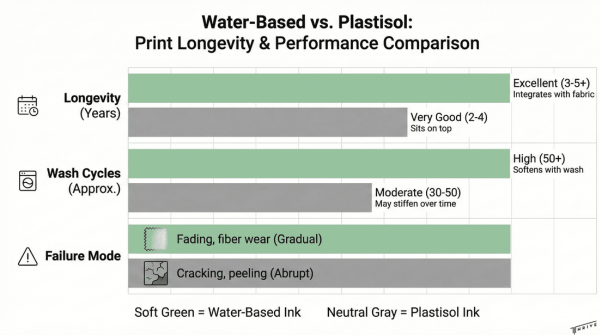
This longevity advantage positions water-based inks as the preferred choice for garments requiring extended wear cycles while maintaining professional appearance standards.
How Should You Choose a Screen Printing Partner for Water-Based Ink Projects?
Choosing a screen printing partner for water-based ink projects requires evaluating expertise, equipment capabilities, and proven results with eco-friendly printing methods. Water-based ink printing demands specialized knowledge in humidity control, curing processes, and fabric compatibility that not all print shops possess.
Key factors include the printer’s experience with water-based formulations, equipment designed for longer cure times, and understanding of fabric-ink interactions. Look for partners who demonstrate proper mesh selection (above 180 count), humidity management systems, and extended conveyor dryer capabilities for complete water evaporation and curing.
Can Thrive Screen Printing Help With Water-Based Ink Screen Printing?
Thrive Screen Printing specializes in water-based printing techniques to ensure colorful and professional results for diverse applications. The company originated in Wisconsin in 1990 and moved headquarters to Phoenix, Arizona in 1997, building expertise that spans over three decades of custom printing.
Their high-volume capabilities include 5 automatic M&R presses and two manual units, capable of producing 20,000 prints per 8-hour shift. Thrive offers both water-based and plastisol ink options alongside specialty finishes such as foil, metal, and gel printing techniques.
The team’s experience dates back to 1990 when they started by creating custom band t-shirts. Due to water-based printing adaptability, their technique extends beyond apparel to create various paper products such as postcards, napkins, paper carrier bags, and food packaging.
What Are the Key Takeaways About Water-Based Ink in Screen Printing?
The key takeaways about water-based ink demonstrate significant industry adoption and technological advancement driving market growth. In 2024, more than 42% of screen printing processes utilized water-based inks compared to solvent-based alternatives, reflecting the industry’s environmental shift.
Over 68% of global apparel brands have transitioned at least partially to water-based inks for prints, logos, and designs. The water-based ink market is projected to grow from USD 9.7 billion in 2025 to USD 13.0 billion by 2035, indicating sustained demand growth.
Regulatory compliance drives adoption, with over 63% of textile manufacturers adopting water-based systems due to compliance with international standards like OEKO-TEX 100 and REACH. Environmental regulations by the U.S. Environmental Protection Agency (EPA) led to a 38% reduction in VOC emissions from printing operations.
Technical innovations continue improving performance—the introduction of heat-set acrylic emulsions and polyurethane dispersions improved ink flexibility and adhesion by over 40% compared to traditional products. These advancements position water-based inks as the preferred choice for environmentally conscious brands seeking quality results.