

If you’re standing in front of shelves of screen printing emulsions feeling overwhelmed, you’re not alone. We understand that choosing between diazo, photopolymer, and dual-cure options can seem daunting when your print quality and production efficiency hang in the balance. You’ve come to the right place for a clear, comprehensive guide that will help you select the perfect emulsion for your specific printing needs.
Screen printing emulsion is a light-sensitive liquid coating applied to mesh screens that, when exposed to UV light through a film positive, creates a durable stencil for transferring ink onto substrates.
TL;DR Key Points:
• Consider mesh count, ink type, exposure time, and environmental conditions as your four primary selection factors when choosing an emulsion
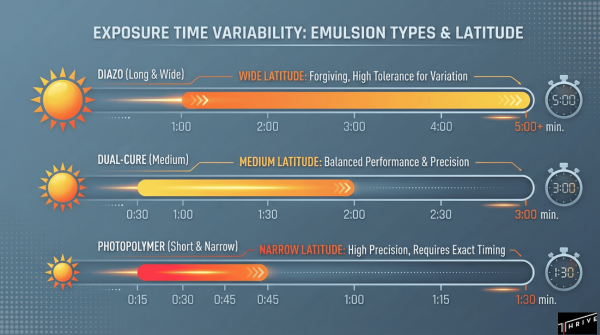
• Diazo emulsions offer the most forgiving exposure latitude at the lowest cost, making them ideal for beginners and shops with inconsistent conditions
• Photopolymer emulsions provide the fastest exposure times and highest detail capabilities but require precise exposure control
• Dual-cure emulsions combine the benefits of both types, offering high resolution with wide exposure latitude at a medium price point
• Water-based inks require water-resistant emulsions, while plastisol inks work with most emulsion types
• Common issues like premature breakdown and washout stem from underexposure, improper mixing, or inadequate environmental control
• Thrive Screen Printing’s 40,000-square-foot facility demonstrates how proper emulsion selection enables production of up to 24,000 items daily
Quick Tip: Start with a dual-cure emulsion like Chromaline’s CP Tex if you’re unsure – it offers excellent versatility with forgiving exposure latitude while still delivering professional results across various ink types and mesh counts.
Understanding emulsion selection transforms from a confusing technical challenge into a strategic advantage when you know which factors matter most. With the global screen printing emulsion market valued at USD 1.2 billion in 2024 and projected to reach USD 1.8 billion by 2033, making the right choice positions your operation for success in this growing industry. Let’s explore how each factor influences your emulsion decision and guide you toward the optimal choice for your specific printing applications.
What Factors Should I Consider When Choosing an Emulsion?
Emulsion selection depends on four critical factors: mesh specifications, ink compatibility, exposure equipment, and environmental conditions. Each factor influences stencil quality, print performance, and production efficiency in screen printing operations.
How Do Mesh Count and Screen Type Impact Emulsion Choice?
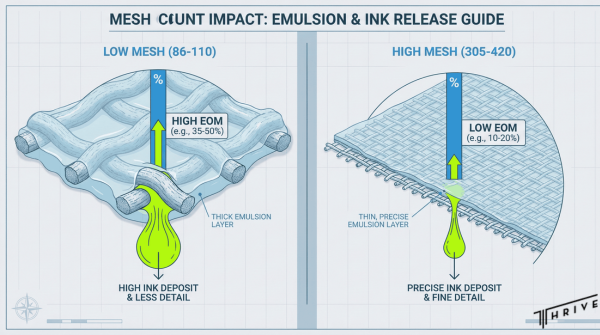
Mesh count determines the emulsion type required for optimal stencil formation. Lower mesh counts (86-110) accommodate heavy ink deposits and glitter inks, while higher mesh counts up to 420 enable fine detail and halftone printing. The emulsion must bridge mesh openings effectively to create solid stencil walls.
Emulsion Over Mesh (EOM) should measure 10% to 20% of mesh thickness for optimal print quality. This ratio ensures proper ink release while maintaining stencil durability during production runs.
What Role Does Ink Type Play in Selecting an Emulsion?
Ink chemistry directly influences emulsion compatibility and stencil performance. Water-based and discharge inks require water-resistant emulsions to prevent stencil breakdown during printing. Solvent-based inks demand emulsions with specific chemical resistance properties to withstand aggressive solvents.
Plastisol inks offer the greatest compatibility across emulsion types due to their forgiving chemical properties. This flexibility makes plastisol systems ideal for shops using multiple emulsion types or transitioning between different stencil-making approaches.
How Does Exposure Time Affect Emulsion Suitability?
Exposure characteristics vary significantly between emulsion types, affecting workflow and quality control. Photopolymer emulsions feature fast exposure speeds with narrow latitude, requiring precise timing and calibrated equipment. Diazo emulsions expose slowly but offer wide latitude, making them forgiving for inconsistent conditions.
Dual cure emulsions provide medium exposure speeds with wide latitude, combining efficiency with forgiveness. LED exposure units deliver energy savings and cooler operation compared to traditional metal halide lamps, though exposure times may require adjustment.
Are Environmental Conditions Important for Emulsion Selection?
Environmental control significantly impacts emulsion performance and stencil quality. Ideal screen room conditions maintain 30-40% relative humidity and 60-80°F (15-27°C) temperature. High humidity causes emulsion to absorb moisture, extending drying times and affecting exposure calculations.
Diazo and dual-cure emulsions expose slower in high humidity environments, while photopolymer emulsions may expose faster. Consistent environmental control ensures predictable results and reduces variables that can compromise stencil quality across production runs.
This analysis guides you toward the next consideration: understanding the specific characteristics and applications of each emulsion type available in the market.
What Are the Main Types of Emulsions Used in Screen Printing?
The main types of emulsions used in screen printing are diazo, photopolymer, and dual cure emulsions. Each type offers distinct advantages in terms of cost, performance, and application requirements. Diazo emulsions provide cost-effective solutions for beginners, photopolymer emulsions deliver precision for detailed work, and dual cure emulsions combine versatility with forgiving exposure characteristics.
How Does Diazo Emulsion Work and When Should I Use It?
Diazo emulsion is a two-part system that requires mixing with a diazo sensitizer before use. This emulsion type offers wide exposure latitude, making it highly forgiving for inconsistent exposure conditions. Diazo emulsions have lower solids content compared to other types, which translates to the most cost-effective option for screen printing operations.
The mixing requirement limits shelf life to approximately 6-8 weeks after sensitization. Best applications include shops with variable exposure conditions, beginning screen printers, and operations prioritizing budget over precision. The forgiving nature of diazo emulsions allows for successful stencil creation even with basic exposure equipment.
What Are the Benefits and Drawbacks of Photopolymer Emulsions?
Photopolymer emulsions have the highest solids content among all emulsion types while maintaining low viscosity for easy coating. These ready-to-use emulsions offer long shelf life and excel at high-detail work requiring precise stencil reproduction.
The primary benefits include superior resolution capabilities and extended storage stability. However, photopolymer emulsions command higher costs and require precise exposure timing due to narrow exposure latitude. This narrow window demands calibrated exposure units and consistent processing conditions for optimal results.
When Is a Dual Cure Emulsion the Best Option?
Dual cure emulsions utilize two sensitizers, combining the benefits of both diazo and photopolymer systems. These emulsions offer high solids content with wide exposure latitude, providing excellent resolution capabilities while remaining forgiving during exposure.
Medium-priced between diazo and photopolymer options, dual cure emulsions represent optimal versatility for most applications. Recommended products include Chromaline’s CP Tex and Baselayr Long Lasting for beginners seeking professional results. This combination makes dual cure emulsions ideal for shops requiring both precision and flexibility in their screen making process.
The next section will examine how different ink types interact with each emulsion type, helping determine the most compatible combinations for specific printing applications.
How Do Different Inks Interact With Each Type of Emulsion?
Different ink types require specific emulsion properties to maintain stencil integrity and achieve optimal print quality. Water-based inks demand water-resistant emulsions, plastisol inks work with standard formulations, and specialty inks need chemically resistant options. Understanding these interactions prevents costly stencil failures and ensures consistent production results. The following sections detail which emulsions work best with specific ink systems and why these pairings matter for your printing success.
Which Emulsions Are Best for Water-Based Inks?
Water-based inks require water-resistant emulsions to prevent stencil breakdown during printing. These inks contain water as the primary carrier, which can weaken or dissolve standard emulsions that lack proper chemical resistance.
Chromaline offers water-resistant options like Hydro-X specifically designed for water-based systems. Ecotex PWR provides water-resistant properties with fast exposure times for high-volume production. SAATI’s Textil PHW Red delivers exceptional durability against water-based and discharge ink formulations.
Water-based inks have lower environmental impact than plastisol inks, making them increasingly popular for eco-conscious printing operations. However, they require precise emulsion selection and proper curing techniques to achieve optimal results.
This water-resistance requirement leads directly into understanding how plastisol inks interact differently with emulsion systems.
What Emulsion Should I Use for Plastisol Inks?
Plastisol inks are compatible with most emulsion types due to their forgiving chemical composition. These petroleum-based inks contain no water, eliminating the need for specialized water-resistant emulsions that water-based systems require.
Standard diazo, photopolymer, and dual cure emulsions all work well with plastisol inks. This compatibility gives printers flexibility to choose emulsions based on other factors like exposure speed, cost, and detail requirements rather than chemical resistance.
No special water resistance is required since plastisol inks don’t contain water or aggressive solvents. This makes plastisol printing more straightforward for shops using multiple emulsion types across different applications.
The flexibility with plastisol contrasts sharply with the specialized requirements of solvent and specialty ink systems.
Are There Emulsions Specifically for Solvent or Specialty Inks?
Solvent-based inks require emulsions with specific chemical resistance properties to withstand aggressive solvents and carriers. Standard emulsions may dissolve or weaken when exposed to these harsh chemicals during printing.
Specialty printing techniques like flock, foil, and high-density printing may require specialized emulsions designed for extreme conditions. These applications often involve multiple passes, high temperatures, or aggressive adhesives that can compromise standard stencils.
SAATI’s Textil PHW Red and Textil PHU-HR Red are designed for high-performance textile printing with superior chemical resistance. CCI’s HXT series provides enhanced durability for specialty ink applications requiring extended press runs.
These specialized emulsion requirements demonstrate how ink chemistry directly impacts emulsion selection, leading into broader troubleshooting considerations for maintaining stencil integrity across all printing applications.
How Can I Troubleshoot Common Issues With Emulsions?
Emulsion troubleshooting involves identifying specific failure patterns and implementing systematic corrections to prevent future breakdowns. Common issues stem from exposure problems, environmental factors, and inadequate screen preparation procedures.
What Causes Premature Emulsion Breakdown and How Can I Prevent It?
Premature emulsion breakdown occurs when stencils fail before completing their intended print runs. Underexposure creates weak polymer cross-links that cannot withstand squeegee pressure and ink chemistry. Proper screen preparation prevents 60-80% of adhesion failures through thorough degreasing and surface profiling.
Environmental control maintains emulsion integrity throughout the printing process. High humidity environments above 50% relative humidity weaken emulsion bonds by introducing moisture that interferes with polymer networks. Darkroom temperature fluctuations beyond ±5°F can cause differential curing rates and internal stress formation.
Prevention strategies include:
- Calibrating exposure units monthly using step wedge tests
- Implementing 3-step degreasing protocols with appropriate dwell times
- Installing humidity monitoring systems in screen preparation areas
- Establishing temperature-controlled storage for coated screens
How Can I Fix Underexposed or Overexposed Emulsion?
Underexposed emulsion produces weak stencils with incomplete polymer cross-linking that deteriorate during printing cycles. Calibrated exposure units eliminate 90% of exposure-related failures by maintaining consistent UV output and timing accuracy.
Exposure calculators determine optimal times by measuring UV intensity, emulsion thickness, and mesh parameters. The Rz value quantifies stencil surface texture, with values below 2.5 micrometers indicating proper exposure for high-definition printing applications.
Correction methods include:
- Installing UV radiometers to monitor lamp degradation
- Conducting weekly step wedge evaluations with 21-step exposure guides
- Implementing exposure matrices for different emulsion-mesh combinations
- Recording EOM measurements to maintain 15-20% mesh thickness ratios
What Should I Do If My Emulsion Washes Out Too Easily?
Emulsion washout indicates severe underexposure or compromised sensitizer chemistry in diazo-type systems. Diazo sensitizer degrades within 4-6 weeks after mixing, losing photosensitivity and creating washout conditions during development.
UV output verification prevents washout by ensuring adequate exposure energy delivery. Metal halide lamps lose 20-30% intensity over 1,000 operating hours, requiring systematic replacement schedules to maintain consistent performance.
Screen moisture content affects exposure calculations and washout resistance. Residual moisture from inadequate drying creates barriers that prevent complete polymer formation during UV exposure.
Solutions for washout problems:
- Testing diazo mixing ratios with fresh sensitizer batches
- Measuring UV lamp output using calibrated radiometers
- Implementing forced-air drying systems for consistent moisture removal
- Establishing lamp replacement protocols based on operating hours
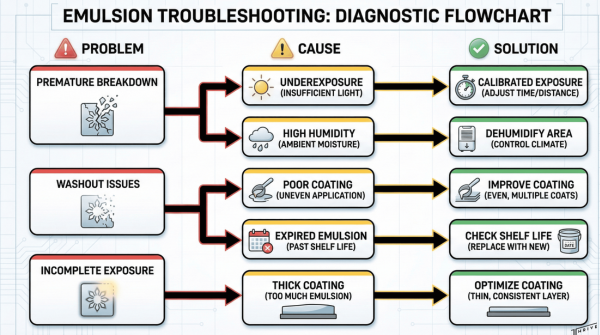
This troubleshooting approach systematically addresses the most common emulsion failures, providing practical solutions that improve stencil durability and print quality consistency.
How Should You Approach Choosing the Right Emulsion With Thrive Screen Printing?
Choosing the right emulsion requires professional guidance and proven expertise. Thrive Screen Printing combines technical knowledge with large-scale production experience to help clients select optimal emulsion solutions for their specific printing requirements.
Can Thrive Screen Printing Help Me Select the Best Emulsion for My Needs?
Thrive Screen Printing can help you select the best emulsion through their extensive production expertise and technical capabilities. Operating from a 40,000-square-foot facility in Phoenix, Arizona with over 50 employees, Thrive demonstrates proven expertise in handling diverse printing challenges requiring different emulsion types.
The company’s daily capacity reaches 24,000 items using various printing techniques including:
- Traditional screen printing with multiple emulsion systems
- DTG printing for complex designs
- Specialty techniques like flock, foil, and high-density printing
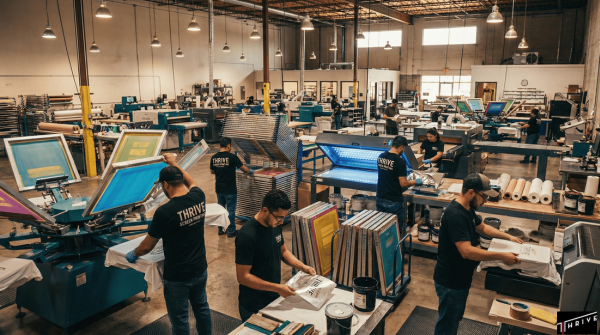
Their diverse clientele spans private brands, corporate events, and entertainment industry projects, providing experience with emulsion requirements across different applications. This broad exposure helps their team understand which emulsions perform best for specific ink types, mesh counts, and production volumes.
What Are the Key Takeaways About Finding the Right Emulsion for Screen Printing?
The key takeaways about finding the right emulsion emphasize that no single emulsion works best for every application. Industry experts stress that the ideal choice depends on your specific application, equipment setup, and experience level with screen printing processes.
Market Growth and Standards:
- The global screen printing emulsion market reached USD 1.2 billion in 2024 and projects growth to USD 1.8 billion by 2033 with a 5.2% CAGR
- ISO 12647-5 establishes process control parameters for four-color screen printing, including tone value, dot gain, and screen angles
Leading Manufacturer Options:
- Chromaline specializes in water-resistant formulations
- SAATI offers high-performance textile printing emulsions
- CCI provides diverse application-specific products
Technology Advancement:
Computer-to-Screen (CTS) technology eliminates film positives, streamlining screen-making processes and reducing variables that affect emulsion performance.
The right emulsion selection balances cost, performance requirements, environmental conditions, and operator skill level to achieve consistent, high-quality printing results.

Robert Fisher is the founder and CEO of Thrive Screen Printing and brings extensive experience in the screen printing and fulfillment industry.